 Food
Food Farmers
 Sustainable Living
 Living Planet
 News
News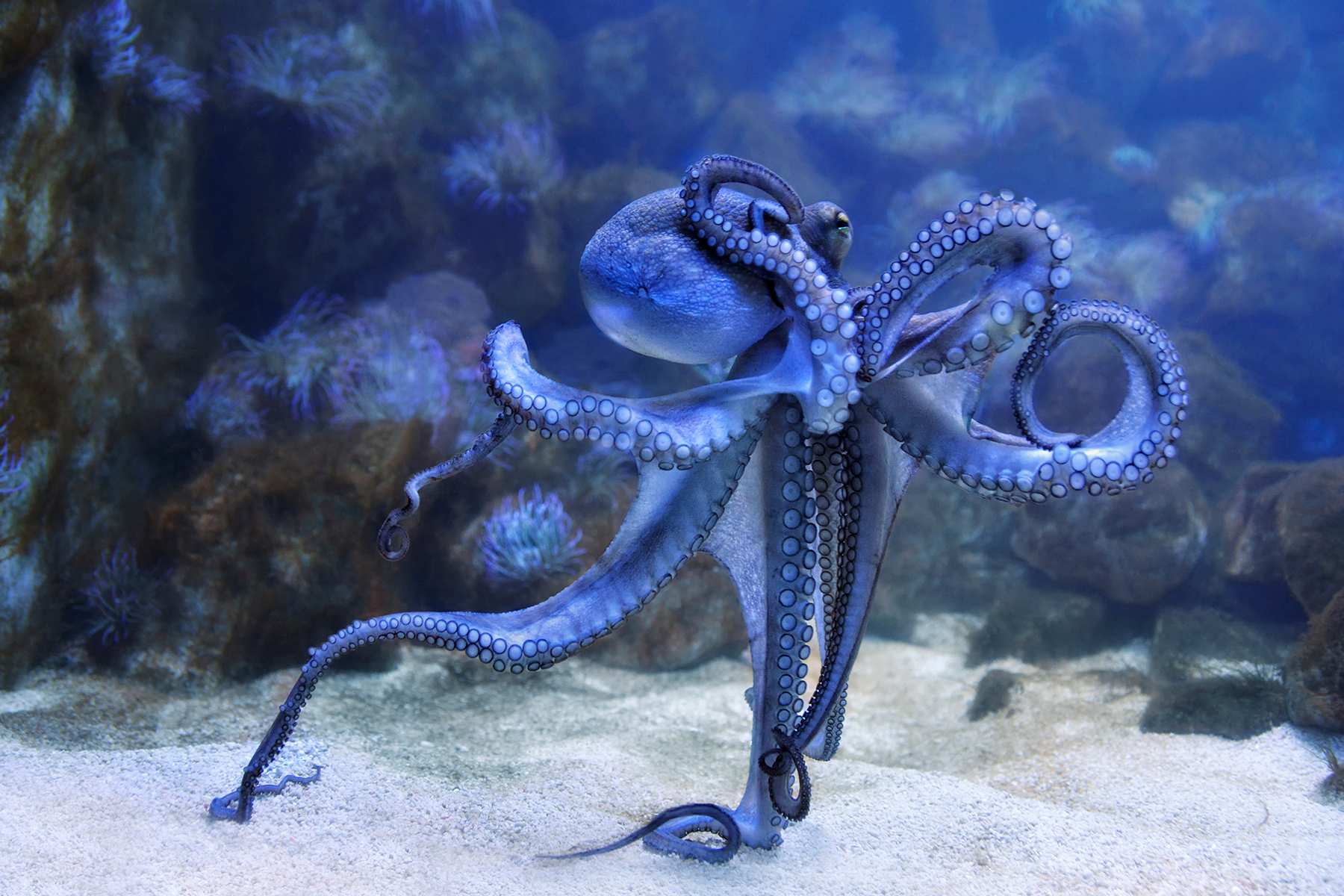
World Octopus Day is celebrated every year on October 8th and is a great opportunity to appreciate these fascinating, eight-armed animals. Inspired by the intriguing relationship between a filmmaker and an octopus featured in the documentary “My Octopus Teacher,” at eco18, we thought that recognizing this day was a perfect way to honor these extraordinary sea creatures. They are masters of disguise, problem-solvers, and vital parts of healthy oceans. Let’s take a quick look at what makes them so special—and why they deserve our protection.
Octopuses are among the most intelligent invertebrates. Their brains aren’t just in their heads. In fact, “scientists have long suspected that octopuses’ arms may have a mind of their own,” enabling them to multitask and solve complex problems with impressive efficiency. In captivity, they’ve been seen opening jars, navigating mazes, and even using tools—all strong signs of intelligence.
With no bones, octopuses can slip through tiny spaces—making them famous escape artists. Their flexible bodies and clever minds enable them to evade predators and explore the ocean’s numerous hiding places.

Camouflage Experts
A very well-known feature of the octopus is their camouflage abilities, which few creatures can match. Using specialized skin cells called chromatophores, iridophores, and leucophores, they can instantly change color and texture to blend in or communicate. Some can even mimic the appearance of other sea animals to avoid danger.
Their unique anatomy is an understatement. Octopuses have three hearts (two to pump blood through the gills, one for the rest of the body) and blue blood, which is better for carrying oxygen underwater. Each arm boasts powerful, sensitive suckers that help them taste, grasp, and move with precision.
In the food web, octopuses are both predators and prey. They keep populations of crabs and clams in check and serve as food for larger marine animals, such as seals and sharks. Their presence signals a healthy ecosystem—when octopus numbers decline, it’s a warning sign for the ocean.
Protecting Octopuses
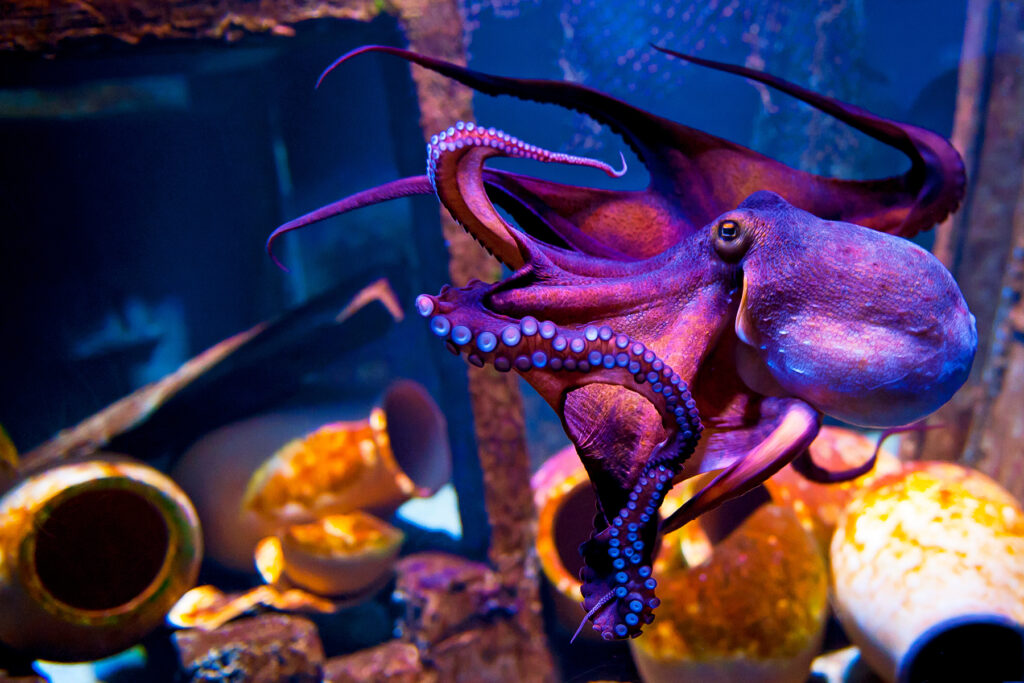
Although, as a group, Octopuses are not in extinction, some species are in danger of being threatened by overfishing, pollution, and habitat loss. Considering that the well-being of our oceans is linked to these remarkable animals, here are a few things we all can do to help.
On World Octopus Day, you can:
- Learn more about marine life and conservation.
- Choose sustainably sourced seafood.
- Reduce plastic waste.
- Support ocean conservation organizations.
Together, we can keep our oceans—and their extraordinary octopuses—thriving for generations to come.
