 Food
Food Farmers
 Sustainable Living
 Living Planet
 News
News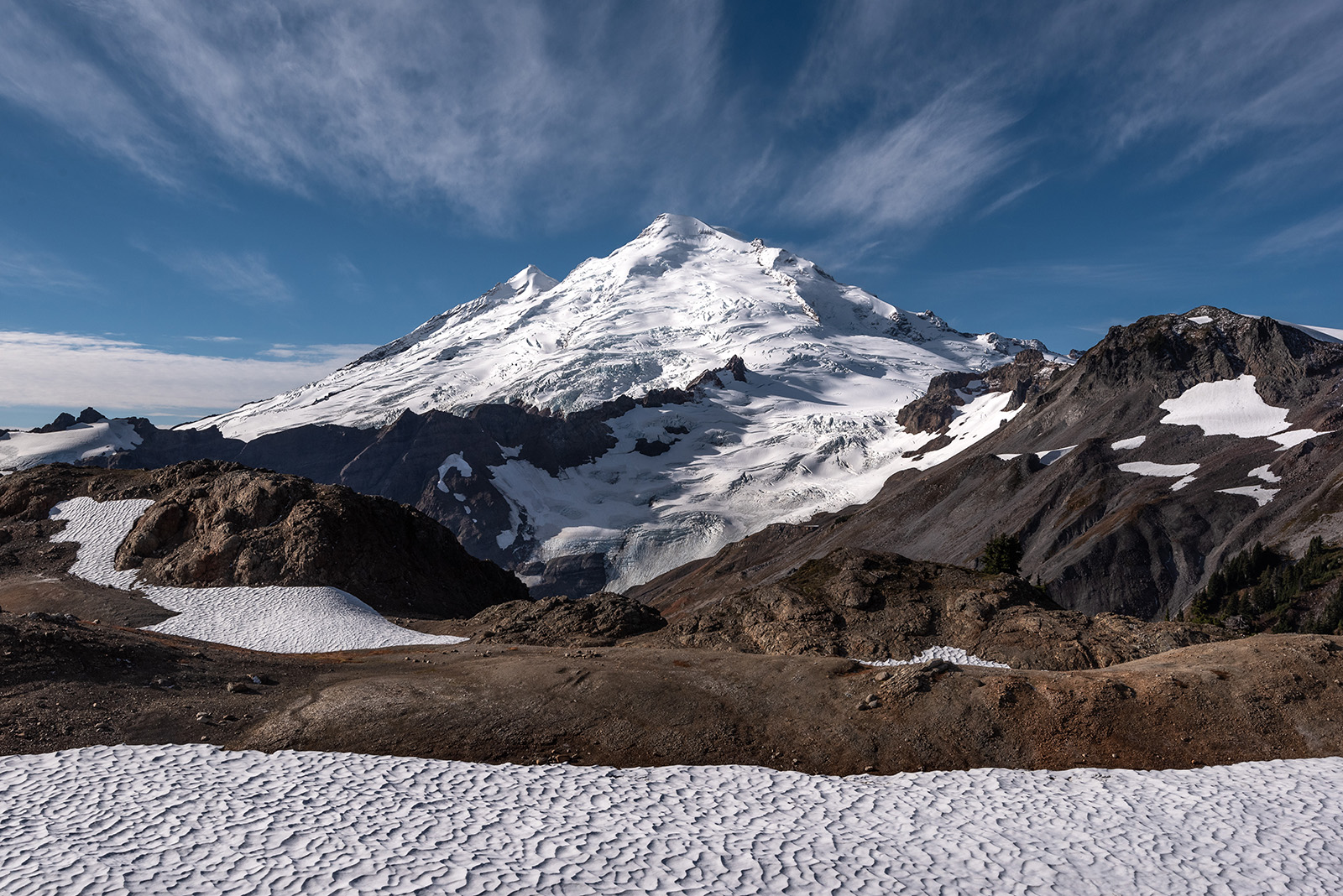
Although some of us may have heard about the rapid disappearance of glaciers worldwide due to climate change, it isn’t always easy to grasp the full extent of this issue, which, according to some researchers, accounts for 21% of sea level rise over the past 20 years.
In a recent episode of CBS’s Sunday Morning, we watched in awe the work that glaciologist Mauri Pelto has done over the past forty years as part of his 50-year goal. He has trekked into Washington’s rugged North Cascade Mountains year after year to measure and document some of the region’s most important glaciers. His work, through the North Cascades Glacier Climate Project, has created one of the longest and most complete records of glacier health in the United States.
The results are disturbing. All 47 glaciers studied by Mauri have experienced significant shrinkage since the 1980s. In fact, 12 have completely vanished, while nine of them have disappeared only in the last five years. The cause is clear: human-driven climate change. Warmer winters lead to more rain and less snow, while longer, hotter summers cause glaciers to melt faster than they can rebuild.
But these changes aren’t limited to the high mountains. North Cascades glaciers feed rivers relied on by people, farms, and wildlife. Summer meltwater cools streams for salmon, fills city reservoirs, and irrigates crops. As glaciers vanish, rivers risk running lower and warmer, putting ecosystems and communities under stress.
Mauri isn’t alone in his mission. His daughter, Jill Pelto, has been joining him in the field for 17 years, carrying not just measuring tools but also a sketchbook. Jill is both a scientist and an artist. Instead of just publishing charts and graphs, she turns data into beautiful watercolor paintings.
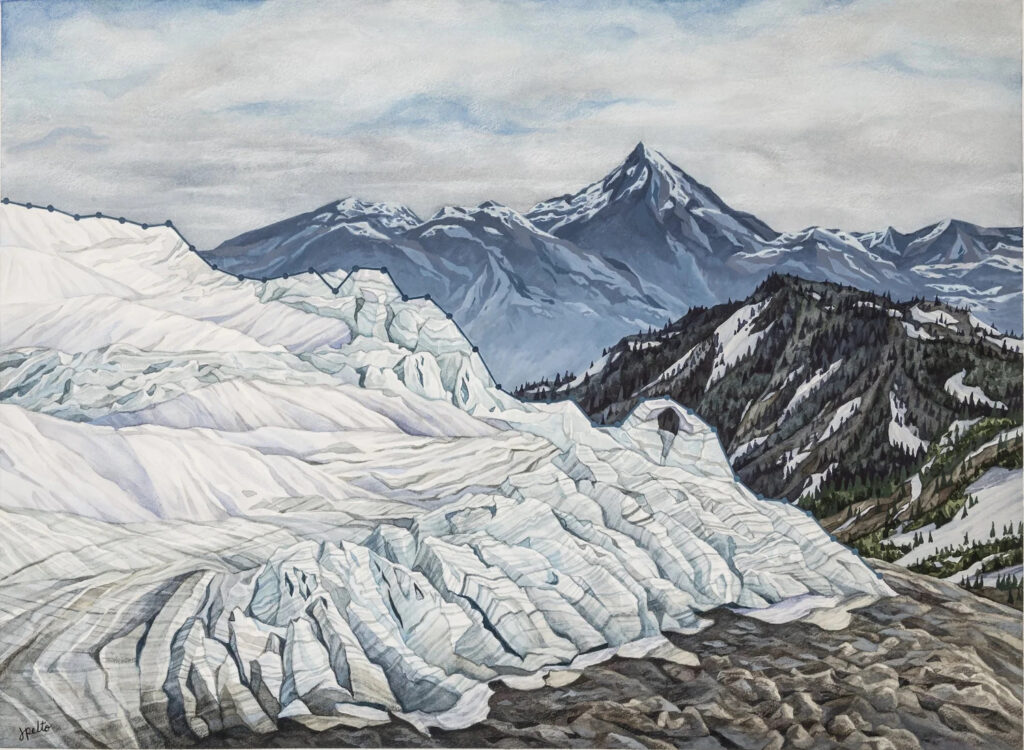
Her art is unique because scientific data isn’t just a subject—it is built into the work itself. For instance, a graph line showing decades of glacier loss might become the sharp edge of a mountain. Declining river flows could be presented in fading shades of blue. Through this process, her art transforms quantitative findings into visual experiences that help viewers not only understand but also emotionally connect with scientific realities.
Together, Mauri and Jill show how science and art inform and complement each other. Mauri’s precise measurements provide the hard facts, while Jill’s paintings interpret and humanize those facts. Their collaboration shows that by combining data and creativity, we not only understand that glaciers are vanishing and climate change is real, but also how these truths affect us all.
But understanding the problem is not enough—we also need to connect with it emotionally. Through data and brushstrokes, the Peltos are inviting us all to care, to act, and to recognize that what happens on those distant peaks matters in our own backyards.
