 Food
Food Farmers
 Sustainable Living
 Living Planet
 News
News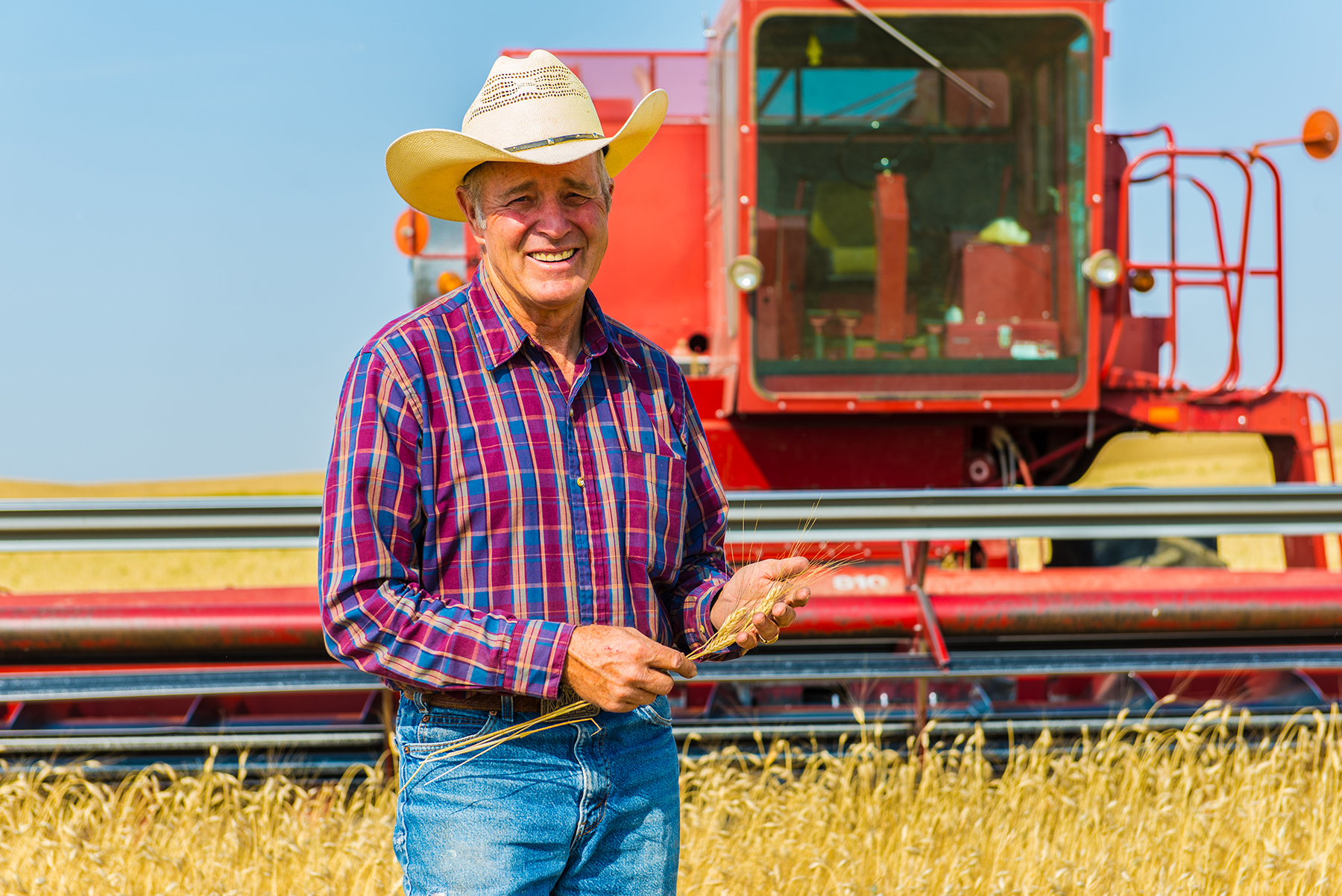
This month, we are thrilled to welcome back an organic farming trailblazer who has previously graced the pages of eco18. Bob Quinn returns to the spotlight, not only to mark the one-year anniversary of The Quinn Institute—a visionary initiative aimed at creating a healthier future through a cutting-edge research and demonstration hub for regenerative organic agriculture—but also to celebrate his remarkable contributions to the industry. As a beloved leader in the regenerative organic movement, Bob has been nominated for the prestigious 2026 World Food Prize, often called the “Nobel Prize for Food and Agriculture.” If awarded, he would make history as the first farmer to receive this distinguished honor.
1. Can you share a bit about your journey and how it shaped your passion for the work you do today?
I grew up on a third-generation Montana farm, where long days spent caring for wheat and cattle taught me the value of hard work and a deep connection to the land. Summers were filled with community fairs, rodeos, and family traditions that shaped who I am.
One summer, I was handed a few kernels of “King Tut Wheat.” I didn’t know it then, but those kernels would spark a passion that, years later—after earning my Ph.D. in Plant Biochemistry—would turn into a family project and eventually become a global organic grain brand.
For almost 40 years, I have been committed to promoting the philosophy of “food as medicine” to support health and prevent diet-related chronic diseases. I’ve also continued farming full-time, fostering organized and sustainable agriculture, locally produced food and fuel, and encouraging the idea that food should be our medicine and medicine should be our food. I also promote food production systems based on producing high nutrition and quality rather than high yield.
From farm roots to a worldwide enterprise, that journey drives my passion for building a healthier, more sustainable future.
2. Have you always been passionate about protecting the environment?
Growing up on a farm meant being deeply connected to nature—it was simply how life worked, though we never labeled it “green” or “eco-friendly” at the time. On our family’s wheat and cattle ranch in North Central Montana, we raised our own chickens, milked cows, and even made our own ice cream. We butchered our beef and hogs, so breakfast often meant bacon and eggs straight from our farm. Summers revolved around a big garden that fed us fresh produce, and we canned and froze vegetables and fruits to last through winter. In essence, we lived what people today call “farm-to-table,” but for us, it was just everyday life.
3. Were there any challenges or obstacles you faced early in your career, and how did you overcome them?
It wasn’t easy. As the organic movement gained momentum in the late 1980s and early 1990s, chemical companies launched aggressive campaigns to discredit organic practices, even pressuring banks not to support organic farmers. I’ll never forget when my local lender showed me a letter from a chemical rep urging them to deny loans to farmers transitioning to organic. Fortunately, my bankers believed in us and in organic farming as a sustainable way forward, which made all the difference in overcoming those challenges.
4. Who were your biggest influences or mentors, and how did they impact your vision for The Quinn Institute?
My grandfather had a profound influence on my approach to farming. He introduced me to natural farming methods at an early age, planting the seed for my future in organic agriculture. Nevertheless, my biggest influences are a blend of my familial heritage, scientific curiosity, real-world experiences, and the inspiring work of others in the regenerative organic movement. These elements have come together to fuel my pioneering efforts with Kamut and my commitment to building a more sustainable and healthy food system.
5. Together with local, national, and international collaborators, you launched The Quinn Institute to advance regenerative organic agriculture and address the national food and health crisis. One year later, how is it going?
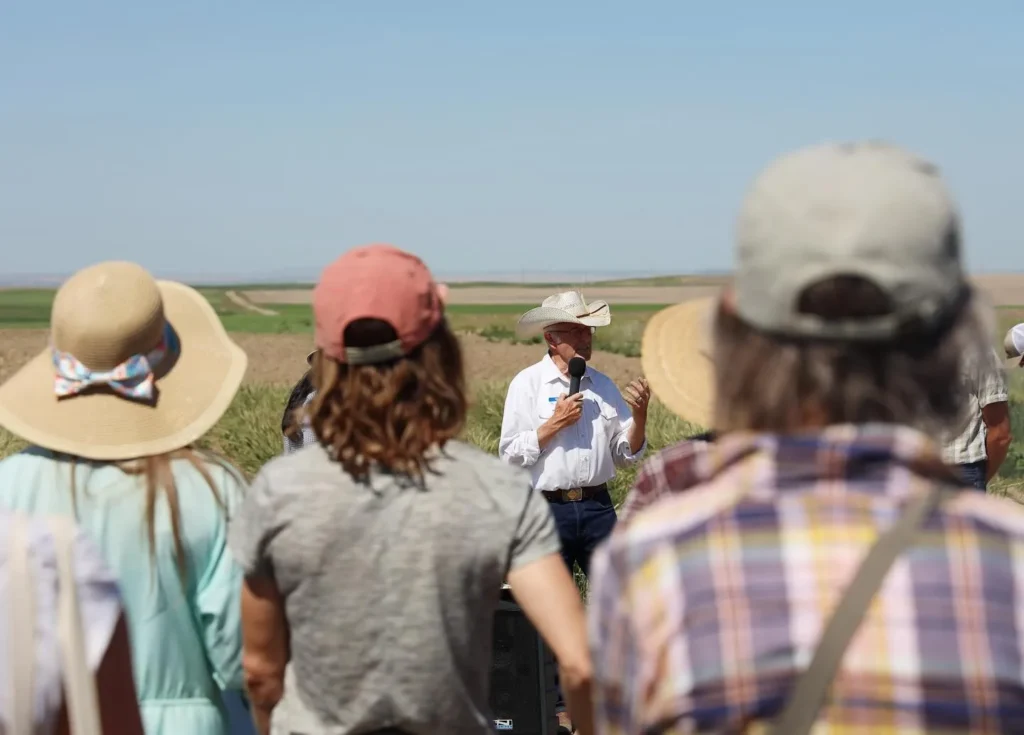
Launching the Institute is just the beginning of revitalizing rural America by scaling up the number of successful regenerative organic producers growing nutrient-dense foods, thereby improving both our planet’s health and the health of its people. Since we began operations in May 2024, we have established partnerships with local organizations, private companies, universities, and research centers that share similar goals in crafting a healthier future for our population.
We are addressing long-standing farming challenges like perennial weeds and soil fatigue by rotating crops and planting legumes that naturally fertilize the ground. We are also working on a key project to develop a hard white winter wheat variety designed for local bread bakers, modeled after ancient grains, and with more nutritious and easier-to-digest properties. Additionally, and in cooperation with the Big Sandy Medical Center in Montana, we intend to look at the concentration of glyphosate in the body, which studies have found to be potentially carcinogenic to human beings. All this, and much more, is what we hope to achieve while promoting the healing of the Earth by growing food as medicine. We envision a future where many prescriptions are for wholesome food directly from the farm, not pills from the pharmacy, and we hope to turn that vision into a sustainable reality.
6. Do you see food as medicine being embraced in the U.S. and beyond as a way to revolutionize our approach to nutrition, healthcare, and the planet?
I’m inspired by the fact that for thousands of years, our ancestors understood and embraced the concept of food as medicine. The real question is whether we’ll return to that wisdom—and how quickly we’ll make the shift. I believe change is inevitable, but it can happen in one of two ways: by choice or by necessity. Choosing to change would be far easier and far more rewarding. If we delay, we risk being forced into change by the collapse of a healthcare system overwhelmed by chronic illness and unsustainable costs, which could eventually cripple our economy. In that scenario, communities may have to rebuild from the ground up, focusing on the basics for survival.
7. Why is community so important to you?
I firmly believe in the power of community—when we come together and act as one, we thrive as one. My decision to vertically integrate my business in Big Sandy about 40 years ago was a deliberate choice, driven by the understanding that every job we create has a significant impact. In rural America, where poverty rates are nearly four percentage points higher than in urban areas, breaking the cycle of decline and despair starts with providing stable, meaningful, and well-paying jobs. I’m proud to have contributed by creating a few such opportunities. I expand on this in my book Grain by Grain, Chapter 12: Bringing Rural Jobs Back.
8. How did you feel when you learn that you have been nominated for the 2026 World Food Prize award, which is often referred to as the “Nobel Prize for Food and Agriculture”?
When I learned about my nomination for the 2026 World Food Prize, I was truly humbled and overwhelmed with gratitude. This award represents the highest recognition in a field that has been my life’s work. To even be considered among such incredible innovators and changemakers is an honor beyond words. It’s a testament not just to my efforts, but to the countless people—my family, colleagues, and community—who have supported and inspired me along the way. This nomination reinforces my commitment to advancing sustainable agriculture and creating a healthier, more resilient food system for future generations.
9. What has been the most rewarding moment for you as the founder of The Quinn Institute?
The most rewarding moment as the founder of The Quinn Institute has been witnessing the real-world impact of our work—seeing people embrace sustainable practices and reconnect with the land in ways that benefit both their communities and the planet. My goal has always been to inspire positive change and foster a sense of higher purpose. There is deep satisfaction in knowing that our efforts are not only improving lives but also leaving a lasting, positive imprint on the environment.
10. What are your thoughts on foods that have shown significant potential in preventing, alleviating, or managing specific health conditions?
- Scientific evidence strongly supports the growing trend of incorporating whole grain foods into daily diets, as they offer protection against health issues like cardiovascular disease, type 2 diabetes, and colorectal and breast cancer. Ancient grains, such as KAMUT® Brand Wheat, play a key role in promoting healthy eating habits by replacing unhealthy processed and bleached flours with the nutritional benefits of whole grains.
- Over 30 scientific studies have compared diets featuring KAMUT® Brand Wheat to those with modern wheat in individuals with chronic conditions like cardiovascular disease, diabetes, irritable bowel syndrome, and non-alcoholic fatty liver disease. The findings consistently show significant health benefits from ancient wheat, including reductions in LDL cholesterol, blood sugar, insulin levels, and insulin resistance, along with increases in antioxidant capacity and essential minerals like magnesium, calcium, and zinc. Most notably, diets with ancient wheat demonstrated a 25-40% increase in anti-inflammatory markers compared to modern wheat, highlighting its potential to combat inflammation.
- A rising trend in artisanal baking further underscores the value of whole grains. Bakers are increasingly embracing slow, natural fermentation processes, heirloom grains, and freshly milled whole wheat flour to preserve the aroma, texture, and flavor of the grain. Many bakeries now mill their own flour to avoid the nutrient loss that occurs when flour sits unused for extended periods. While modern palates have been conditioned to prefer the taste of white flours—designed for extended shelf life at the cost of removing vitamins, minerals, and fiber—there is a growing shift toward higher-quality grains. This shift is particularly beneficial for those with gluten sensitivities, as naturally fermented bread, made without commercial yeast strains, allows gluten to break down almost entirely before baking, making it easier to digest.
11. What strategies do you think could make nutritious foods more accessible to everyone, ensuring that food can truly serve as medicine for all?
This is precisely the reason why The Quinn Institute was created. Our goal is to integrate the principles of ‘food as medicine’ by having medical providers on staff who specialize in chronic diseases and mental health conditions influenced by diet. At the same time, we aim to grow a diverse range of nutrient-dense foods—including fruits, vegetables, grains, seeds, poultry, and grass-fed animals for eggs, meat, and dairy—using regenerative farming practices that maximize nutritional value.
We start with seeds that offer the highest potential for nutrition, cultivating them in systems that allow for optimal nutrient expression. By harvesting at peak quality and minimizing processing, we preserve the food’s full nutritional potential while avoiding the loss of nutrients caused by over-processing or the addition of harmful additives. The nutrient-rich foods produced will directly support the health of patients treated by our on-site medical practitioners.
Beyond this, we are committed to contributing to the national Food as Medicine movement. We plan to collaborate with medical professionals across the region who share similar goals, fostering a network to exchange ideas, share success stories, and promote the use of food as a powerful tool for improving health and reducing disease severity.
12. We’d love to hear your thoughts on how a holistic approach to diet can benefit individuals dealing with health challenges.
As much as it has been said about food, there’s still a long way to go in recognizing the real consequences of using chemicals in our food systems. Sustainable agriculture can deliver a nutritious food system that can drastically reduce the incidence of four of the top seven causes of death in the United States, lift thousands of Americans out of poverty, and fight climate change.
13. As a leader, what values guide your decision-making and leadership style?
As an entrepreneur and scientist working in the heart of rural American poverty, I’ve learned that bold decision-making and a willingness to take risks are essential. My guiding principle is simple: prioritize food and other essentials, like energy, as the foundation of a value-driven economy. By doing so, we can create opportunities for health, economic growth, and ecological renewal—especially in some of the most underserved communities in our country. For me, true success isn’t just about business growth; it’s about the positive impact we create at every step of the supply chain—enhancing economic resilience, ecological sustainability, and nutritional well-being.
14. What advice would you give to aspiring entrepreneurs or changemakers who want to start their own initiatives?
Experimentation is, without a doubt, one of the most exciting and rewarding aspects of any project—it’s where creativity meets possibility. For me, this has been especially true in farming, where testing new crops and methods has led to some of my most meaningful breakthroughs. My advice to aspiring entrepreneurs and changemakers is to embrace the process of trial and error. Don’t be afraid to take risks, ask questions, and challenge conventional thinking. Every experiment, whether it succeeds or fails, brings valuable lessons and insights that can shape your vision and refine your approach.
Remember, innovation doesn’t happen overnight. It’s the result of curiosity, persistence, and a willingness to learn from both successes and setbacks. Stay open to new ideas, collaborate with others, and remain committed to your purpose. By fostering a mindset of exploration and adaptability, you’ll not only turn ideas into realities but also create solutions that can make a lasting impact.
15. How do you stay motivated and inspired?
Staying motivated comes from a deep sense of purpose and a clear understanding of why I do what I do. For me, it’s about contributing to something bigger than myself—whether it’s improving the health of our communities, regenerating the land, or creating opportunities in rural areas that need them most. Knowing that my work can make a tangible difference keeps me energized, even on the toughest days.
I also find motivation in the process itself—experimenting, learning, and seeing ideas come to life. Every challenge is an opportunity to grow, and every small success is a reminder of the progress being made. Surrounding myself with passionate, like-minded people also fuels my drive. Their energy and shared commitment to a common goal inspire me to keep pushing forward.
Lastly, I stay motivated by focusing on the long-term vision. It’s easy to get bogged down in day-to-day struggles, but keeping my eyes on the bigger picture—the impact I want to leave behind—helps me stay grounded and determined to keep moving forward.
16. I know of your interest in collaborations between medical professionals, health coaches, and nutrition experts in providing holistic patient care. Can you elaborate on this?
I truly believe that collaboration between medical professionals like Dr. Ron Weiss, who has set up a plant-based food practice in the middle of his organic farm in Long Valley, NJ, health coaches, and nutrition experts represents the future of healthcare. This integrated approach acknowledges that health is multifaceted and requires addressing not just symptoms, but the root causes of illness—many of which are tied to diet and lifestyle. By bringing together diverse expertise, we can create a more comprehensive and personalized approach to patient care, one that empowers individuals to take charge of their health while receiving the guidance and support they need.
This belief is a core part of the Quinn Institute’s vision. Our goal is to serve as a hub for innovation and collaboration, where professionals from these fields can work together to explore the powerful connection between food, health, and healing. By fostering partnerships and sharing knowledge, we aim to not only improve individual patient outcomes but also contribute to a broader shift in how healthcare is delivered—one that prioritizes prevention, nutrition, and overall well-being.
17. What learning opportunities does the Quinn Institute provide for those interested in regenerative agriculture and sustainable food production?
We’re excited about expanding our educational initiatives at the Quinn Institute. Since the launch of the Institute, we have been hiring additional staff to launch a mentoring program aimed at helping farmers transition to reduced chemical use or fully organic practices. With this team in place, we also hope to introduce short courses and seminars hosted at the QI, offering hands-on learning experiences.
Through field days, which we hosted our first one in 2024 and plan to continue holding in upcoming years, and other events, we aim to showcase our work as well as the philosophy driving our efforts. Our goal is to make these events and educational opportunities a regular part of what we offer, fostering a community of learning and collaboration around regenerative agriculture.
18. Is there anything else you would like to add that we haven’t touched upon?
For decades, I’ve dedicated my work to proving and teaching that we can heal the earth by growing food as medicine. This begins with five essential pillars: using high-quality seed, planting in healthy soil built through regenerative organic practices, harvesting at peak nutrition, processing minimally, and prioritizing local communities before exporting beyond them.
Let’s come together to collaborate, share ideas and projects, and push the boundaries of knowledge, technology, and education—working toward common goals with respect and understanding, even when we see things differently.
